Archive for the ‘Books I’ve Read’ Category

More on The Help

~ Wednesday, March 3rd, 2010

One of my favorite novels of all time…


Watch CBS News Videos Online

Do Yourself a Favor

~ Saturday, December 12th, 2009

Read Lit
Mary Karr
Time Magazine's 3rd choice for year's best fiction

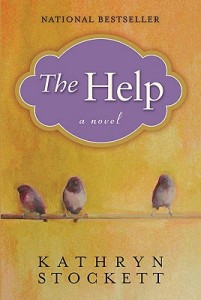
The Help

~ Thursday, September 24th, 2009

The Help

Just finished reading/listening to this book. It brought back so many memories of my childhood, as it was a story that took place in the 50s and 60s. The audio book is the best I’ve ever listened to! Do yourself a favor and BUY AND READ THIS BOOK.

Janet Maslin of the NY Times Book Review has it about right.

Racial Insults and Quiet Bravery in 1960s Mississippi
By JANET MASLIN
Published: February 18, 2009

In “The Help,” Kathryn Stockett’s button-pushing, soon to be wildly popular novel about black domestic servants working in white Southern households in the early 1960s, one woman works especially tirelessly. She labors long into the night. She is exhausted. Her eyes are stinging, her fingers bloody and sore.

Is she ironing pleats? Scrubbing toilets? Polishing silver for an all-important meeting of the local bridge club? No way. She is Miss Skeeter Phelan, a white woman. And the white women of “The Help” don’t do those demeaning jobs. They don’t do much of anything else either.

But brave, tenacious Skeeter is different. So she is slaving away on a book that will blow the lid off the suffering endured by black maids in Jackson, Miss. Skeeter’s going to call the place “Niceville,” but she won’t make it sound nice. All of Jackson’s post-sorority girls from Ole Miss will be up in arms if Skeeter’s tell-all book sees the light of day.

The trouble on the pages of Skeeter’s book is nothing compared with the trouble Ms. Stockett’s real book risks getting into. Here is a debut novel by a Southern-born white author who renders black maids’ voices in thick, dated dialect. (“Law have mercy,” one says, when asked to cooperate with the book project. “I reckon I’m on do it.”) It’s a story that purports to value the maids’ lives while subordinating them to Skeeter and her writing ambitions. And it celebrates noblesse oblige so readily that Skeeter’s act of daring earns her a gift from a local black church congregation. “This one, this is for the white lady,” the Reverend of that church says. “You tell her we love her, like she’s our own family.”

A brief word now about Ms. Stockett: When she moved to New York City from Jackson, she came to understand how deeply ambivalent she felt about her roots. If a New Yorker told her that Jackson must be beautiful, she would say it was fraught with crime. But if a New Yorker spoke contemptuously about Jackson, Ms. Stockett would rise to its defense. “Mississippi is like my mother,” she writes in an afterword to “The Help.” And you will see, after your wrestling match with this problematic but ultimately winning novel, that when it comes to the love-hate familial bond between Ms. Stockett and her subject matter, she’s telling the truth.

Expectations notwithstanding, it’s not the black maids who are done a disservice by this white writer; it’s the white folk. The two principal maid characters, the lovingly maternal Aibileen and the angry, scrappy Minny, leap off the page in all their warm, three-dimensional glory. Book groups armed with hankies will talk and talk about their quiet bravery and the outrageous insults dished out by their vain, racist employers.

The worst of these bosses, a woman known as Miss Hilly, treats Minny like a thief. And she campaigns to have Jackson households install extra toilets so that colored help will not have to use white families’ restricted bathrooms. With the kind of lead-footed linkage that runs throughout this novel — even though it may accurately reflect what Ms. Stockett witnessed in her Southern girlhood — Miss Hilly’s Junior League does its fund-raising for the sake of “the Poor Starving Children of Africa” while treating the poor African-Americans of Jackson as if they were subhuman.

Miss Hilly is enough of a witch for readers to wait eagerly for a house to fall on her. She makes herself the nemesis of each of the book’s black characters and many of its white ones. Sounding decades older than Skeeter even though the two were college roommates, Hilly shrieks villainously about the virtues of segregation and the rectitude of Mississippi’s politicians.

News of the real world seeps into the book only occasionally, with a brief televised glimpse of James Meredith integrating Ole Miss or other muffled rendered news. “There is a skirmish in Vietnam,” Skeeter notices. “The reporter seems to think it’ll be solved without much fuss.”

The tide of soapsuds rises as Skeeter comes across a copy of Jim Crow laws and is galvanized into action; as Skeeter the liberal-minded spinster begins dating the son of an intolerant local politician; as Skeeter begins wondering what happened to Constantine, the maid who lovingly raised her; and as both Aibileen and Minny become increasingly privy to the secrets of their employers’ households.

Though “The Help” might well have veered off into violent repression of these maids’ outspokenness (one character is blinded for having accidentally used a whites-only bathroom), Ms. Stockett doesn’t take it there. She’s interested in the affection and intimacy buried beneath even the most seemingly impersonal household connections.

Aibileen is this book’s loveliest character, especially in scenes that have her raising Mae Mobley, the toddler now in her charge. Having endured the pain of raising white child after white child only to see them grow up and away from her, Aibileen is still ready to embrace another one. On the evidence of Ms. Stockett’s autobiographical afterword, this is the part of the story she knows best; she herself had an absentee white mother and was raised by a black woman named Demetrie. She loved Demetrie dearly without ever giving much thought to what Demetrie’s life was like, and she says that “The Help” was written to fill in that gap.

Mae Mobley’s little games include pretending to stage a sit-in at a Woolworth’s counter and pretending to ride the bus with Rosa Parks. Or so it goes in this ultimately soft-pedaled version of Southern women’s lives, one in which real danger is usually at a distance.

At one point Skeeter hears a strange new guy, Bob Dylan, singing a strange new song, “The Times They Are A-Changin’,” and finds herself full of optimism. Had she heard the same Bob Dylan singing “The Lonesome Death of Hattie Carroll,” his accusatory song about the fatal caning of a 51-year-old black barmaid by a young white patrician, “The Help” might have ventured outside its harsh yet still comfortable, reader-friendly world.

The world breaks everyone, and afterward, many are strong in the broken places

~ Monday, June 22nd, 2009

ColumbineI just finished this book and found it very well written and researched.

Many would ask, why would I want to read such a book? Jennifer Senior, in The New York Times Review of Books, answered this best:

COLUMBINE is an excellent work of media criticism, showing how legends become truths through continual citation; a sensitive guide to the patterns of public grief, foreshadowing many of the reactions to Sept. 11 (lawsuits, arguments about the memorial, voyeuristic bus tours); and, at the end of the day, a fine example of old fashioned journalism . . . moving things along with agility and grace.

Amazon Pricing Structure

~ Thursday, April 16th, 2009

Confessions of an Economic Hit Man
So I needed to get the book, Confessions of an Economic Hit Man by John Perkins for my company book group and went right to Amazon. (This was before I pledged to my son that I’d use the library more.)

The paperback for this book published in 2004 was $10.20, the Kindle version was $9.99 and the hardback book was $6.99.

Yep, I purchased the hardback book, but am feeling guilty now because I saved money but my carbon footprint is wider and deeper, what with the paper and the shipping.

Amazon really needs to fix their pricing for Kindle books!

“Use the library…you will ‘own’ more books than ever that way.”

~ Monday, April 13th, 2009

That’s what my wise “baby” son chatted to me the other day, and he’s right. I’m going to try really hard to use the library more and not buy so many books.

This is a book that I read in July of 2008. I enjoyed it, as much as anyone can enjoy a book about 9/11, but I also agree with this review from Laura Miller that appeared in Salon in May of 2007.

Falling Man

Falling Man
Don DeLillo’s powerful new post-9/11 novel makes surprising connections between the masculine minds of a terrorist and a World Trade Center survivor.

In the days after Sept. 11, when editors were scrambling for a writer who could say something profound about what had just happened, Don DeLillo was a name you heard a lot. The attacks themselves seemed so DeLillo-esque, a freakish juxtaposition of big, glossy, spectacular images and the confusion, fear and death we knew lay behind them. How was it possible to bridge the gap, to find a way to reconcile the Hollywood unreality of what we saw with the dust and blood of what we thought we felt? I say “thought” because most of us only ever saw the towers fall on TV, yet somehow we seemed to be experiencing it bodily. Ours is a culture constantly building mirages and then trying to peek behind them. Reality TV, backstage industry dish, “just like us” photos of celebrities — we want simultaneously to be dazzled by fantasies and assured of authenticity, and here was a nightmare that collapsed the two and then smashed our faces in it.

I wish I could say that DeLillo’s new novel, “Falling Man” — his Sept. 11 novel at last — offers some unique insight into what happened that day. What I can say is that it’s one of his best books in years, a revelation after the debacle that was “Cosmopolis” and free of the bloat that afflicted even “Underworld.” DeLillo is a master of the prose riff, and there are a few riffs in here as good as anything he’s ever produced: a description of the immediate aftermath of the towers’ collapse from the viewpoint of a man fleeing the World Trade Center, three chapters told from the perspective of one of the hijackers, and a final section that depicts, with almost inhuman perfection, the attacks themselves. For these passages alone, the book is worth reading.

The weaknesses of “Falling Man” are DeLillo’s long-standing ones. Most of them spring from the fact that he is an essayist at heart, who presumably chose the novel because it is the most exalted and revered literary form of our time — and DeLillo is not the sort of writer willing to risk being insufficiently exalted and revered. The characters in “Falling Man” are typically sketchy and the dialogue improbable; everyone speaks in exactly the same stagy, portentous manner as the mouthpiece characters in an experimental play. (What woman, being deserted by a lover, would say, “Do I know how to make one thing out of another, without pretending? Can I stay who I am, or do I have to become all those other people who watch someone walk out the door? We’re not other people, are we?”)

But if DeLillo can never quite make these figures register as actual human beings, they are nevertheless the vehicles for some intriguing ideas, as well as the occasion for some gorgeous writing. The central characters, Lianne and Keith, are an estranged married couple who reunite for a few years after he is nearly killed in the south tower. Lianne’s mother is an imperious retired art history professor sliding into old age, and her father killed himself to escape the ravages of Alzheimer’s. Lianne runs a writing workshop for patients in the early stages of the disease, a last-ditch grasp at memory for its participants, who approach “what was impending, each of them, with a little space remaining, at this point, to stand and watch it happen.” Some especially fine passages describe these people poised on the brink of dissolution, including one woman who, realizing she has forgotten where she lives, notices “the world was receding, the simplest of recognitions. She began to lose her sense of clarity, of distinctness. She was not lost so much as falling, growing fainter.”

Age causes people, even Lianne’s formidable mother, to fade away, and this loss feels oddly more palpable in “Falling Man” than the jolting bereavement of catastrophe. It is Keith who has lost someone in the attacks — a good friend, co-worker and poker buddy — but exactly how isn’t revealed until the description of the plane crash in the last pages of the book. His ineluctable drift away from Lianne and their 8-year-old son, Justin, could be interpreted as a reaction to this trauma, but detachment was Keith’s problem long before “the planes” (as all of the characters in the novel refer to the attacks). He is a classic DeLillo protagonist, a corporate he-man, tall and good-looking with a penchant for fistfights and refrigerated sex, gliding through sterile, fluorescent-lit interiors in a state of chronic emotional disconnection — James Bond for highbrows. He is also, like most of DeLillo’s male heroes, rather boring.

Far more engaging, strangely enough, is the hijacker Hammad, who will guard the cockpit of the airplane that crashes into Keith’s building. DeLillo seems to have an instinctive understanding of the attractions of fanatical martyrdom: What is it, after all, but the disengagement that entices all of his heroes, taken to extremes? Hammad wavers between the religious monomania of his teacher, Mohamed Atta, and the snares of Western hedonism — a German girlfriend, the beach scene in Nokomis, Fla., where his cell is stationed before the attacks. He can run this circuit from normality to fanaticism and back again in a moment, while standing in line at the supermarket: “He looked at women sometimes, yes, the girl at the checkout named Meg or Peg. He knew things she could never in ten lifetimes begin to imagine. In the drenching light he saw a faint trace of fine soft silky down on her forearm and once he said something that made her laugh.”

DeLillo’s most believable character has always been the Lee Harvey Oswald of “Libra,” and Hammad belongs to the same brotherhood of ambivalent yet determined soldiers of self-destruction. He might pause on the streets of Nokomis to consider how easy it would be to climb into a car filled with partying college kids, then turn around and condemn “this entire life, this world of lawns to water and hardware stacked on endless shelves,” as “total, forever, illusion.” As a counterweight to Western pleasures, the stuff Americans believe to be so seductive, stands the stark singularity Hammad finds at an Afghan training camp: “It was all Islam, the rivers and streams. Pick up a stone and hold it in your fist, this is Islam. God’s name on every tongue throughout the countryside. There was no feeling like this ever in his life. He wore a bomb vest and knew he was a man now, finally, ready to close the distance to God.”

The novel will eventually move toward the daring suggestion that Keith and Hammad are enmeshed in a similar process of erasure, focus and distillation. Instead of Islam, Keith boils his existence down to the ascetic discipline of professional gambling, specifically poker. This was the game he played with his dead friend, but Keith’s propensity for scraping things down to the minimum pre-existed Sept. 11. Back then, all the participants in his weekly poker game liked to experiment with renunciation, instituting a ban on food, then on colorless drinks, then on any game but five-card stud and finally forbidding “sports talk, television talk, movie titles.” With each reduction of the options, the stakes grew higher. Restriction and ritual become ecstatic ends in themselves.

DeLillo seems to regard this impulse as essentially masculine and linked to the loyalty of brothers in arms. Possibly Keith turns to professional poker as an unspoken tribute to his lost buddy. If so, he’s unwittingly emulating Hammad’s vow to “shed everything but the men you are with.” Or perhaps it’s that, like Hammad, Keith is in flight from the world, wanting to burn off the “various and human,” in pursuit of “a narrowness of need or wish” that will finally render him pure and free. This impulse is, of course, a kind of pathology, but it’s a disease DeLillo can’t help admiring. Every sentence in “Falling Man” has the same autistic chill to it, the same shiny, frictionless surface. It goes down like a spoonful of mercury.

The surprise of “Falling Man” is how acutely DeLillo imagines the terrorist’s mind and how feebly he captures the experience of the ordinary citizen. The figure who gives the book its title is not the man you think, the one who was photographed as he fell from the towers and whose image is considered by some to be too bleak or exploitative for publication. The Falling Man of the novel is a mysterious performance artist (remember those?) who dangles from public buildings in the same pose as the real falling man, presumably as a reminder or commemoration or commentary.

These appearances are exactly the sort of cryptic, arty motif that seems quintessentially DeLillo and quintessentially ’80s, an artifact of the pre-Internet days. Back when the mass media disseminated all images and information, maybe someone like the Falling Man would have been able to strike and then vanish like Zorro, leaving nothing behind but a big question mark. In the 2000s, everything you could ever want to know about the guy would be on the Web, with photos, within a couple of weeks. He’d have a Wikipedia entry. His intentions and their validity would be hashed and rehashed in blogs and cable news programs and Op-Ed columns, ad nauseam.

This sheer glut of information, and of chatter and bloviation, is the signal aspect of post-Sept. 11 culture that DeLillo seems to have missed. His characters, with their walls hung with Louise Nevelson “pieces” and their musings on Kierkegaard, seem weirdly dated, cut off from the mediated existence that their author was once so celebrated for nailing. The quiet of their world is uncanny. Out here, with the rest of us, the “various and the human” have multiplied to the point that they verge on the inhuman. And since the days of “White Noise,” DeLillo has become far more attuned to those men, like Hammad and Keith, who have turned it all off.

A friend recently told me that he thought DeLillo’s prophetic moment had passed, and perhaps he’s right. DeLillo was the great bard of the age of network TV; the monolithic image, its omissions and deceptions, was his subject, not the cacophony and eccentricity of today’s infosphere. No wonder he’s the first one we all thought of during those strange days when suddenly the same show was on every channel. Days like that, however, are few and far between.

“There are a lot of children in Afghanistan, but little childhood.”

~ Thursday, April 9th, 2009

The Kite Runner
I just finished reading The Kite Runner by Khaled Hosseini for my book club. It’s well worth the read, especially since Afghanistan and the escalation in US troops will (should) once again focus our attention to this war-town country. I pretty-much agree with this book review from the NY Times.

Review by Edward Hower*

This powerful first novel, by an Afghan physician now living in California, tells a story of fierce cruelty and fierce yet redeeming love. Both transform the life of Amir, Khaled Hosseini’s privileged young narrator, who comes of age during the last peaceful days of the monarchy, just before his country’s revolution and its invasion by Russian forces.

But political events, even as dramatic as the ones that are presented in ”The Kite Runner,” are only a part of this story. A more personal plot, arising from Amir’s close friendship with Hassan, the son of his father’s servant, turns out to be the thread that ties the book together. The fragility of this relationship, symbolized by the kites the boys fly together, is tested as they watch their old way of life disappear.

Amir is served breakfast every morning by Hassan; then he is driven to school in the gleaming family Mustang while his friend stays home to clean the house. Yet Hassan bears Amir no resentment and is, in fact, a loyal companion to the lonely boy, whose mother is dead and whose father, a rich businessman, is often preoccupied. Hassan protects the sensitive Amir from sadistic neighborhood bullies; in turn, Amir fascinates Hassan by reading him heroic Afghan folk tales. Then, during a kite-flying tournament that should be the triumph of Amir’s young life, Hassan is brutalized by some upper-class teenagers. Amir’s failure to defend his friend will haunt him for the rest of his life.

Hosseini’s depiction of pre-revolutionary Afghanistan is rich in warmth and humor but also tense with the friction between the nation’s different ethnic groups. Amir’s father, or Baba, personifies all that is reckless, courageous and arrogant in his dominant Pashtun tribe. He loves nothing better than watching the Afghan national pastime, buzkashi, in which galloping horsemen bloody one another as they compete to spear the carcass of a goat. Yet he is generous and tolerant enough to respect his son’s artistic yearnings and to treat the lowly Hassan with great kindness, even arranging for an operation to mend the child’s harelip.

As civil war begins to ravage the country, the teenage Amir and his father must flee for their lives. In California, Baba works at a gas station to put his son through school; on weekends he sells secondhand goods at swap meets. Here too Hosseini provides lively descriptions, showing former professors and doctors socializing as they haggle with their customers over black velvet portraits of Elvis.

Despite their poverty, these exiled Afghans manage to keep alive their ancient standards of honor and pride. And even as Amir grows to manhood, settling comfortably into America and a happy marriage, his past shame continues to haunt him. He worries about Hassan and wonders what has happened to him back in Afghanistan.

The novel’s canvas turns dark when Hosseini describes the suffering of his country under the tyranny of the Taliban, whom Amir encounters when he finally returns home, hoping to help Hassan and his family. The final third of the book is full of haunting images: a man, desperate to feed his children, trying to sell his artificial leg in the market; an adulterous couple stoned to death in a stadium during the halftime of a football match; a rouged young boy forced into prostitution, dancing the sort of steps once performed by an organ grinder’s monkey.

When Amir meets his old nemesis, now a powerful Taliban official, the book descends into some plot twists better suited to a folk tale than a modern novel. But in the end we’re won over by Amir’s compassion and his determination to atone for his youthful cowardice.

In ”The Kite Runner,” Khaled Hosseini gives us a vivid and engaging story that reminds us how long his people have been struggling to triumph over the forces of violence — forces that continue to threaten them even today.

*Edward Hower’s latest novel is ”A Garden of Demons.” A former Fulbright lecturer in India, he teaches in the writing department of Ithaca College.